I’m in New York for a conference and I’ve been eating more food than I would normally have if I weren’t away at an event. There are open bar dinner and cocktail parties with free food. Free chocolates all over the trade show floor. And a constant invite to go out and have breakfast, brunch, lunch, dinner, late night snack etc with so many different people.
It’s very easy to end up overeating at events like these.
No matter what starts the overeating train going it seems that a few days of overeating are enough to keep the overeating train chugging along.
In other words, it seems that overeating itself is enough to keep you overeating.
It might be a psychological thing, it probably has to do with eating too many high sugar, fat, and salt foods (like pizza). But overeating can become a habit if you don’t stop it before it gets rolling.
I’ll be taking it light today to put the breaks on this patter because the past couple days were a bit too much. But if I don’t consciously do this today it could easily turn into a week of overdoing it.
This is the sort of thing that can easily get away on you if you’re not paying attention to it.
If you know you’ve overdoing it a bit with your eating, stop and take a moment to re-evaluate what your goals are and decide if you need to purposely take a day to go light and put the breaks on the overeating train.
John
Many area’s of weight loss research will examine specific causes for weight gain and then try to fix that specific cause.
This might make sense in a clinical research setting when the process involves writing a grant to ask for money from a government organization.
But it doesn’t make much sense to you or me who are just trying to find something that works in our life that we can apply today.
Here is just a short list of factors that most likely contribute to the way we eat:
1. Exercise
2. Country we live in
3. Family upbringing
4. Emotional stress
5. Work environment
6. Commute time for work
7. Physical activity levels outside of the gym
8. Workouts (if you do them at all)
9. Relationship status
10. Family status (married or single, kids or not, living with other family members)
11. Genetic factors
12. Socio-economic status (how much cash you got!)
As you can see the genetic component is just one of many factors that impact how you eat. However most of the weight loss research and interventions you hear about focus on just this area.
It’s the proverbial “you’re broken and if we just get enough research funding we’ll be able to build a drug or food program that can fix you”…BS!
The sum total of all the items on the above list (and I’m sure there are others I’ve missed) is what will determine you’re weight loss success.
In the case of weight loss I’m afraid that it will never be possible to truly study it with real effectiveness.
Next monday’s podcast we will cover this topic in detail. You can find it here: Adonis Lifestyle Podcast
John
The buffet’s are treating me well here in vegas even though I’m downright abusing them. (it’s not a fair trade at all)
Eating at buffets has reminded me of the inherent contradiction to the healthy eating mantra of eating a ‘variety’ of foods.
It’s pretty common to hear health/fitness marketers advise eating a diet with as much food variety as possible…the proverbial ‘everything in moderation is ok’ or ‘eat lots of colors’ etc.
But there is a catch 22 with this story…the more foods you have available the more chance you have to overeat. You could almost say that you get ‘full’ on one type of food or flavor/taste, but you still have room for other types of foods and flavors. (the ‘eat variety’ story should be qualified with ‘eat a variety of fruits and veggies’ specifically)
The reality is we need far less food variety then we might think. Most of our nutrients can be found in a few foods, and most of us (when we’re not lighting up a buffet in vegas) eat a routine selection of the same dozen or so foods. And this works perfectly fine for the bulk of the modern world.
You can easily make the argument that the option for eating a wide selection of foods has only become available since the modern industrial revolution anyway. So we’re not evolved to need the type of selection your grocery store offers (how the hell would someone in canada get access to a banana in the winter before the industrial revolution).
In other words, you can get by just fine with far less food variety than you think, and you most likely eat less food variety than any healthy eating mantra ever speaks of anyway. (try to think of all the different foods you’ve eaten in the past 7 days, I’ll bet it’s not as varied as you might like to think)
And that might not be such a bad thing. The more available and affordable different food choices are the more chance you will eat more of all of them.
Thanks for the suggestions on eating venues, I’ll try to check them out, but I gotta say that I’m having a hard time going anywhere besides the various buffets simply to eat prime rib and whatever else happens to be available!
John
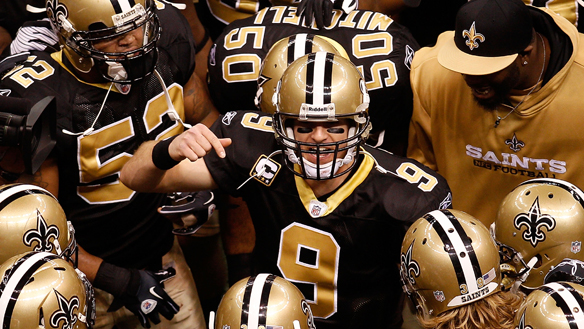
The Saints won a great game yesterday and while they were doing it we consumed copious amounts of chicken wings, pizza, nachos and beer.
And then I got to thinking about how often people in north america (and I’m sure all over the world) get together to celebrate various events and holidays with large feasts.
This is just a short list of event that involve a significant degree of overeating:
1. Thanksgiving
2. Christmas
3. Easter
4. Halloween (not a formal dinner, just way too much candy and chocolate)
5. Superbowl
6. 4th of July (USA) July 1st (Canada)
7. Your birthday
8. Your significant others birthday
9. The birthday of anyone in your family
10. Aug 1st long weekend
11. New Years Eve
12. St Patricks Day (Beer, lots of beer)
13. Any long weekend in the summer that I haven’t mentioned
And I’m sure there are many other days that are special in your yearly routine that I haven’t even mentioned here. Most social gatherings around holidays and big events usually revolve around some sort of feast. If you attend these holiday gatherings and partake in the feast then you probably eat well above your BMR for that day.
Lets say you had 15 big overeating events (like the list above) per year. If you overeat by a total of 1500 calories on the day of each event, and went back to eating at BMR maintenance for the rest of the year you would still likely gain over 6 lbs of fat each year.
And in reality I’m probably being conservative. In many cases every single weekend of the year has at least one big night out of eating for many people…but I’m sure you get the point.
Every time you have a big eating day, you have to offset it with a small eating day otherwise those extra calories will be stored as fat and never be burned off. It’s just simple accounting and budgeting that most of us forget to do.
So like I said in yesterdays post, today is about a 1000-1100 calorie day for me, and tomorrow will be the same. This should offset the extra calories I ate at our superbowl party on sunday.
John

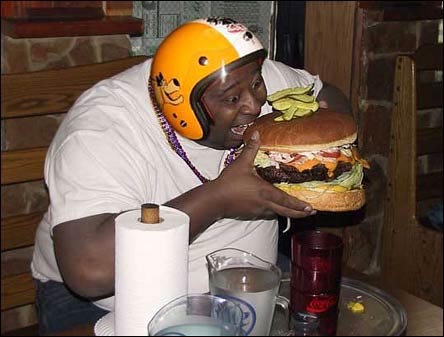
Competitive Eater "Badlands" Booker is never embarrassed about Eating big! Love the helmet, he's gonna need it for that burger!
A friend of mine related a rather embarrassing but revealing story about eating habits the other day.
She was telling us about a barbecue she has just attended, the host was a large woman (around 300 pounds), we’ll call her “Tracey”
Anyway, Tracey wouldn’t eat much at dinner and weighed all of her food, and avoided salad dressing and seemed to have a very strict almost obsessive diet.
This would make anyone wonder how she could be pushing a 300 pound bodyweight if this is really how she eats.
No big deal so far. So here is where the embarrassing part comes in.
Just after the barbecue ended and everyone left my friend realized she had forgot her purse and went back to pick it up. When she walked into the backyard she found Tracey 4/5th’s of the way through an entire apple pie!
Now that is an awkward moment to say the least!
So, the moral of the story is this. If you feel like you need to hide the way you eat from other people, you probably need to make a change.
Secondly, there is no hiding your eating habits from anyone anyway. Did Tracey really think everyone around her believed that she was as strict of a dieters as she was playing up during the barbecue?
People aren’t that dumb, you can’t pull a fast one on everyone around you like that.
The saddest part is that Tracey obviously doesn’t believe anyone will support her or is embarrassed to ask for support with her eating issues.
In reality most people will support you if you ask for it.
Hiding it from everyone is never going to workout and just makes it an even worse and depressing experience when you do in fact eat.
Eating shouldn’t be something you’re ashamed of, it should be something that is fun, social, and celebrated with friends and family.
This is probably the single greatest benefit of Eat Stop Eat. You never have to give up any of the social events that go hand and hand with eating (and you can still lose weight!)
Anyway, I hope people like Tracey can be comfortable eating in front of other people one day soon. It really just doesn’t have to be that way.
John